
Paintless Dent Repair vs. Traditional Auto Body Repair: Which Is Right for Your Vehicle?
Vehicle owners in Los Angeles face unique challenges when it comes to maintaining their cars. From the intense sun exposure that fades paint to the unpredictable traffic that leads to minor fender benders, keeping a vehicle in pristine condition requires strategic decision-making. When damage occurs, the choice between Paintless Dent Repair (PDR) and traditional auto body repair is critical. According to industry data, PDR can reduce repair time by up to 80% compared to conventional methods, making it a preferred option for many drivers seeking efficiency without sacrificing quality. (Contact Us Auto Worx)
Understanding Paintless Dent Repair
Paintless Dent Repair is a specialized technique that removes minor dents, dings, and creases from your vehicle's body panels without the need for sanding, fillers, or repainting. Paintless Dent Repair is a method that restores the original shape of the metal by massaging it from behind using specialized tools. This process preserves the factory finish, which is crucial for maintaining your vehicle's resale value. (Bumper Repair amp Replacement)
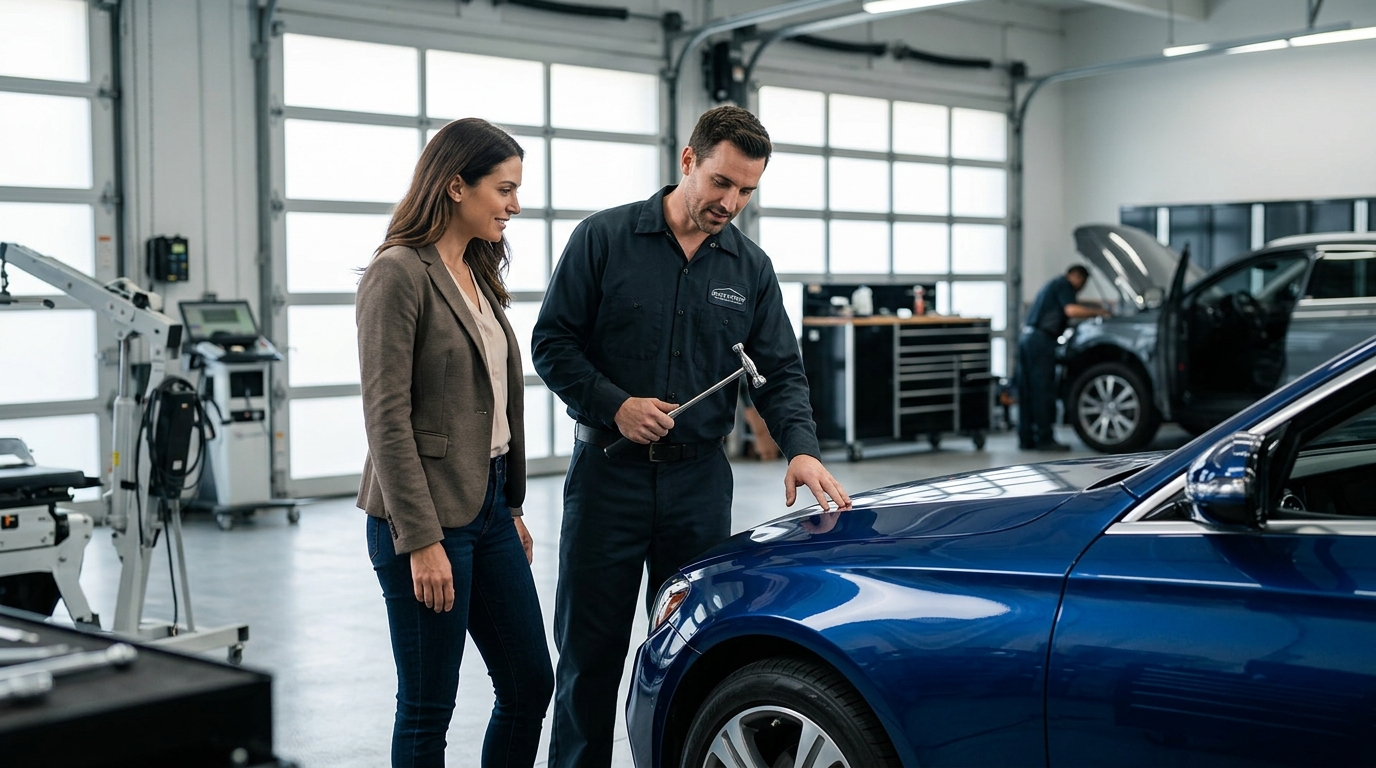
At Auto Worx Collision Center, our certified technicians utilize advanced lighting and precision tools to access the backside of the panel. By carefully pushing the metal back into its original contour, we eliminate the dent without altering the paint. This approach is particularly effective for hail damage, door dings, and minor collision impacts where the paint surface remains intact. (Major Collision Repair in)
The benefits of PDR are significant. It is environmentally friendly because it eliminates the use of harsh chemicals, paints, and fillers. Additionally, because no paint is involved, there is no risk of color mismatch or future peeling. For Los Angeles drivers, this means your car retains its original factory coating, protecting it from rust and corrosion longer than a repaired and repainted surface might.
The Traditional Auto Body Process
Traditional auto body repair involves a more invasive process designed for severe damage. Traditional auto body repair is a comprehensive restoration process that includes sanding, filling, and repainting damaged panels to match the vehicle's original color. This method is necessary when the metal is stretched beyond its elastic limit or when the paint is cracked, chipped, or missing.
The process begins with an assessment of the damage. Technicians then sand down the affected area to bare metal. Body filler is applied to smooth out imperfections and restore the panel's shape. Once the filler cures, it is sanded smooth, and primer is applied. Finally, the area is painted to match the rest of the vehicle, followed by a clear coat for protection and gloss.
While traditional repair is essential for major collisions, it has drawbacks. The process is time-consuming, often taking several days to complete. It also involves the use of volatile organic compounds (VOCs) from paints and solvents, which can have environmental impacts. Furthermore, repainted areas are more susceptible to fading over time compared to the original factory paint, potentially affecting the vehicle's long-term aesthetic appeal.
Key Differences: Cost, Time, and Value
When deciding between PDR and traditional repair, three main factors come into play: cost, time, and vehicle value.
Cost Efficiency
PDR is generally more affordable than traditional repair. Because it does not require materials like paint, primer, or body filler, the labor costs are lower. For minor dents, PDR can cost a fraction of what a traditional repair would. This makes it an attractive option for budget-conscious drivers who want to maintain their vehicle's appearance without breaking the bank.
Time to Completion
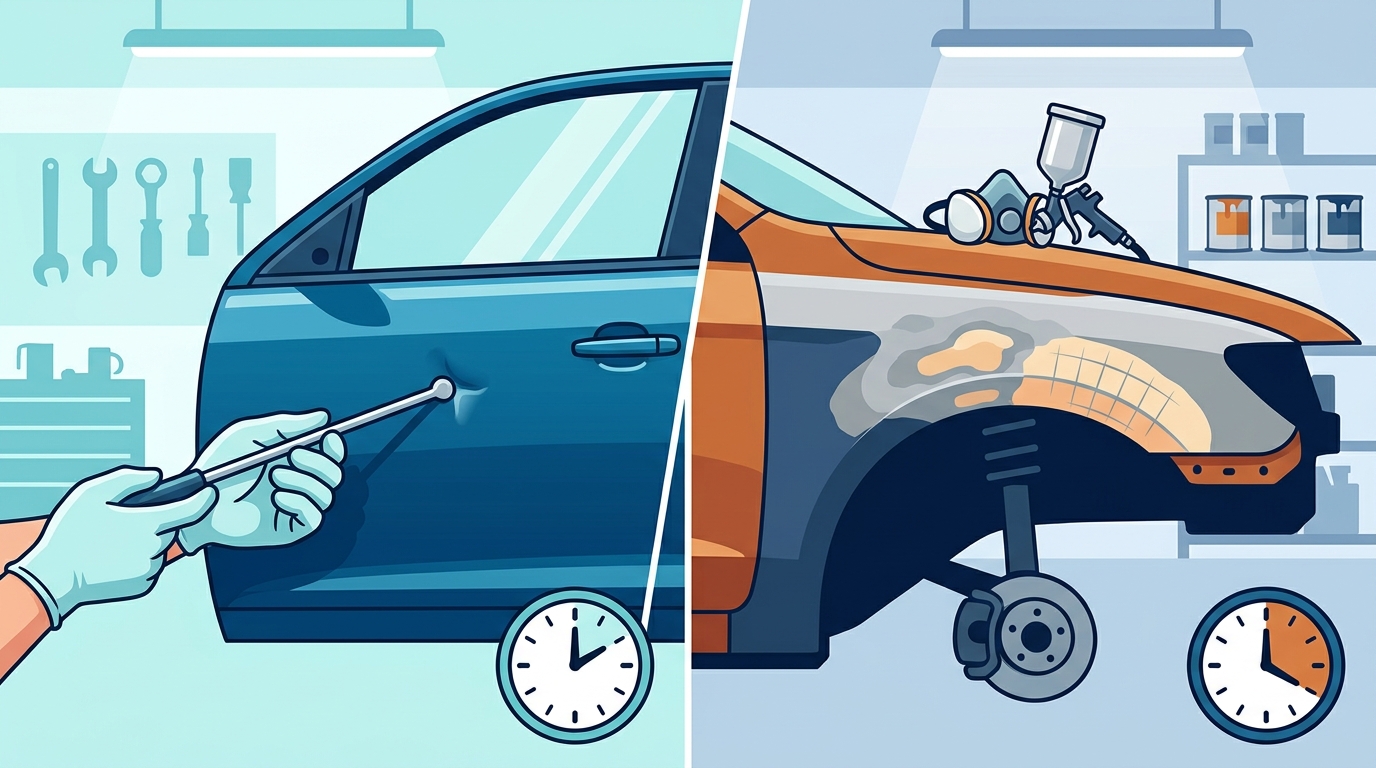
Time is another critical differentiator. PDR can often be completed in a few hours or even less, depending on the size and location of the dent. In contrast, traditional repair can take several days due to the drying and curing times required for fillers and paints. For drivers who rely on their vehicles for daily commutes in Los Angeles, the speed of PDR is a significant advantage.
Impact on Resale Value
Maintaining the factory paint is crucial for resale value. Vehicles with original factory paint are often valued higher than those with repainted panels. PDR preserves this original finish, whereas traditional repair alters it. Even with perfect color matching, a repainted panel may show signs of wear or mismatch under close inspection, potentially lowering the vehicle's perceived value.
When to Choose PDR vs. Traditional Repair
Not all damage is created equal. Understanding when to use each method ensures you get the best outcome for your vehicle.
When to Choose PDR
PDR is ideal for:
- Minor Dents and Dings: Small, shallow dents where the paint is not cracked.
- Hail Damage: Multiple small dents across the roof, hood, and trunk.
- Creases: Sharp lines caused by minor impacts, provided the paint is intact.
- Door Dings: Small dents from adjacent car doors opening into your vehicle.
If the dent is on a body line or edge, PDR may still be possible but requires a highly skilled technician. At Auto Worx, we assess each case to determine if PDR is a viable option.
When to Choose Traditional Repair
Traditional repair is necessary for:
- Severe Collision Damage: Large dents, crumpled panels, or structural damage.
- Paint Damage: Any dent where the paint is cracked, chipped, or missing.
- Stretched Metal: Dents that have stretched the metal beyond its ability to spring back.
- Rust Repair: Areas where corrosion has compromised the metal integrity.
In these cases, PDR cannot restore the panel to its original condition. Traditional repair ensures safety, structural integrity, and a seamless aesthetic finish.
Service Comparison Overview
| Feature | Paintless Dent Repair (PDR) | Traditional Auto Body Repair |
|---|---|---|
| Best For | Minor dents, dings, hail damage | Major collisions, paint damage, rust |
| Paint Preservation | Yes, factory paint remains intact | No, paint is sanded and reapplied |
| Repair Time | Hours to 1-2 days | 3-7 days or more |
| Cost | Generally lower | Generally higher |
| Environmental Impact | Low, no chemicals used | Higher, involves paints and solvents |
| Resale Value Impact | Positive, preserves original finish | Neutral to negative, may show repainting |
Key Takeaways
- Preserve Factory Paint: PDR maintains the original factory finish, which is critical for long-term vehicle value and corrosion resistance.
- Speed and Efficiency: PDR repairs are significantly faster, often completed in hours, minimizing downtime for Los Angeles drivers.
- Cost Savings: For eligible damage, PDR offers a more affordable alternative to traditional body shop repairs.
- Environmental Benefits: PDR eliminates the need for paints, fillers, and solvents, reducing environmental impact.
- Expert Assessment: Not all dents are suitable for PDR. Professional evaluation is essential to determine the best repair method.
- Auto Worx Expertise: With over 63 years of combined experience, our team is skilled in both PDR and traditional repair, ensuring the right solution for every vehicle.
- Insurance Claims: Auto Worx assists with insurance claims for both PDR and traditional repairs, streamlining the process for customers.
Frequently Asked Questions
Can Paintless Dent Repair fix all types of dents?
PDR is effective for minor to moderate dents where the paint is intact. It cannot fix dents with cracked paint, sharp creases that have stretched the metal, or damage on hard-to-reach edges.
How long does Paintless Dent Repair take?
Most PDR repairs are completed within a few hours. Complex cases, such as extensive hail damage, may take one to two days.
Is PDR more expensive than traditional repair?
No, PDR is typically less expensive than traditional repair because it requires fewer materials and less labor time.
Will PDR affect my car's resale value?
On the contrary, PDR can enhance resale value by preserving the original factory paint, which is highly valued by buyers.
Does Auto Worx handle insurance claims?
Yes, Auto Worx Collision Center provides comprehensive assistance with insurance claims, guiding you through the process from start to finish.
What is the difference between a dent and a ding?
A dent is generally larger and may involve more metal deformation, while a ding is a smaller, shallower impression, often from a door opening. Both can often be treated with PDR if the paint is intact.
Can I drive my car after PDR?
Yes, you can drive your car immediately after PDR. There is no drying time required, unlike traditional paint repairs.
Schedule Your Appointment
Don't let dents and dings diminish the appearance and value of your vehicle. Whether you need Paintless Dent Repair or traditional auto body services, Auto Worx Collision Center is here to help. Our team of certified professionals is dedicated to restoring your vehicle to its pre-damage condition with precision and care.
Contact us today to schedule your appointment. Visit our shop at 2323 Cotner Ave. in Los Angeles, or call (310) 478-3400. We are open Monday through Saturday from 8:00 a.m. to 5:30 p.m. Let Auto Worx be your trusted partner in vehicle maintenance and repair.