

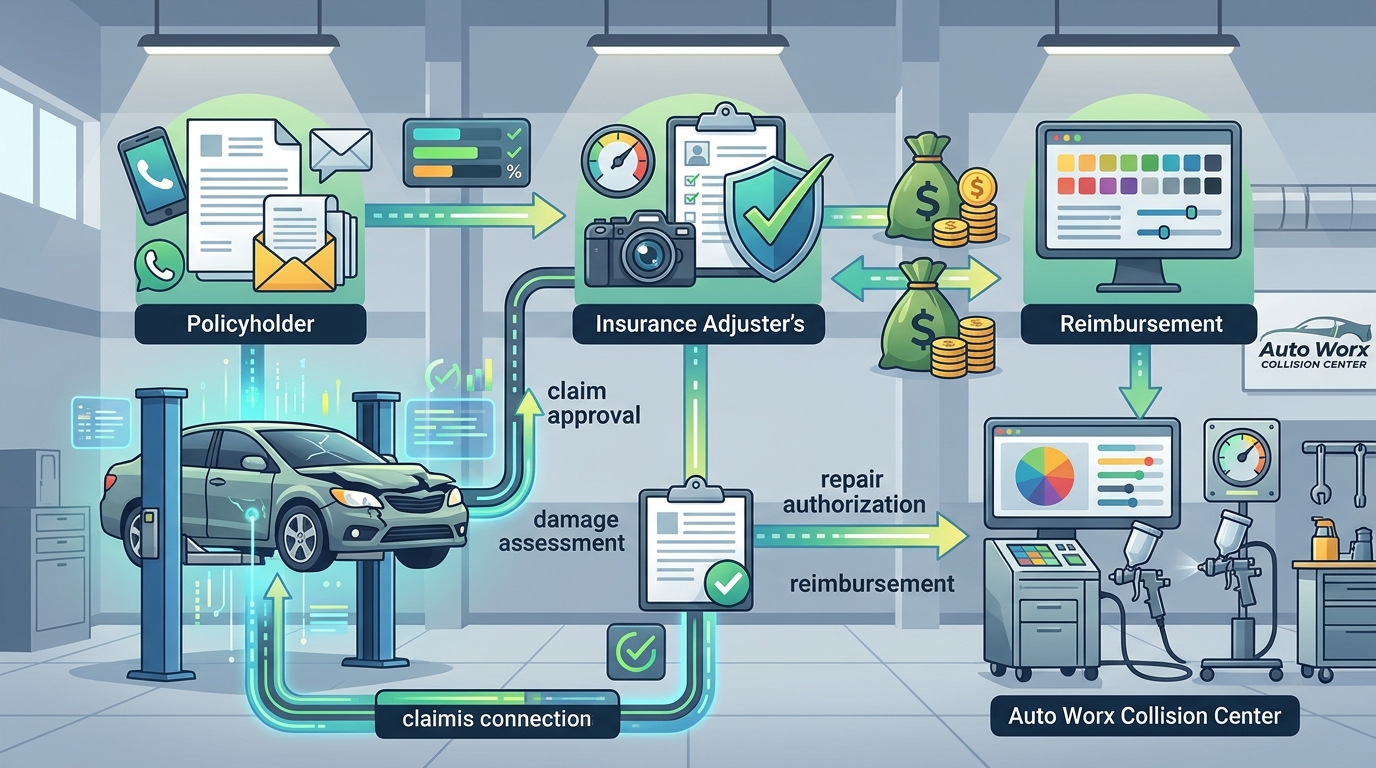
Insurance claim coordination is the process of managing communication between the policyholder, the insurance adjuster, and the auto body shop to ensure accurate damage assessment and fair reimbursement. After a collision, this workflow determines how quickly your vehicle is repaired and whether you face unexpected out-of-pocket costs. At Auto Worx Collision Center, we guide West Los Angeles drivers through this process to minimize stress and maximize claim efficiency.
The Initial Claim Filing Process
The first step in claim coordination is filing a report with your insurance provider. You have the option to file a first-party claim with your own insurer or a third-party claim with the at-fault driver's company. According to the New Jersey Department of Banking and Insurance, you can choose either path depending on your coverage and the specific circumstances of the accident. Filing with your own insurer is often faster because they have a vested interest in getting you back on the road quickly.
Once the claim is filed, an insurance adjuster is assigned to your case. This adjuster will investigate the accident to determine liability and the extent of the damage. It is crucial to provide them with a police report, photos of the damage, and a clear description of how the accident occurred. The adjuster's initial assessment sets the baseline for the repair estimate, so accuracy at this stage is vital.
Damage Assessment and Estimation
After the initial filing, the insurance company will request a detailed damage estimate. This is where the auto body shop plays a critical role in the coordination process. A certified body shop will inspect the vehicle to identify both visible and hidden structural damage. The estimate must be comprehensive to ensure all necessary repairs are covered by the insurance policy. according to Filing a Claim
At Auto Worx Collision Center, our technicians perform thorough examinations to spot damage that might be missed by a casual inspection. We provide fair and honest estimates that include all details needed for the insurance company to approve the work. This transparency helps prevent disputes later in the process and ensures that the repair scope is accurate from the start. according to Filing an Auto
Adjuster Communication and Approval
Once the estimate is submitted, the insurance adjuster reviews it to verify that the repairs are reasonable and necessary. This is a key phase of claim coordination where the shop and the insurer negotiate the scope of work. The adjuster may approve the estimate as is, request additional photos, or ask for a re-inspection. Clear communication between the body shop and the adjuster is essential to resolve any discrepancies quickly. according to Filing an Auto
Subrogation is the right of the insurance company to recover from a third party the amount of damages it paid to you, as explained by the California Department of Insurance. If the other driver is at fault, your insurer may pay your claim first and then seek reimbursement from the other party's insurer. Understanding this dynamic helps you manage expectations regarding the timeline and final settlement.
Repair Execution and Quality Control
After the insurance company approves the estimate, the repair process begins. The body shop will order the necessary parts and schedule the work. During this phase, the shop must keep the insurer informed of any new issues discovered during disassembly. If additional damage is found, the shop will submit a supplemental estimate for approval before proceeding. according to Accident management center
Quality control is a critical component of this stage. The shop must ensure that all repairs meet safety standards and manufacturer specifications. At Auto Worx Collision Center, we use top-quality parts and ensure that your repair is done right the first time. We keep you informed through every step of the process, so you are never left wondering about the status of your vehicle.
Final Settlement and Vehicle Return
Once the repairs are complete, the shop submits a final invoice to the insurance company. The insurer will review the invoice to ensure it matches the approved estimate. If everything is in order, the insurer pays the shop directly, and you are responsible only for your deductible. This final step concludes the claim coordination process and allows you to take your vehicle back. according to So You ve
It is important to inspect your vehicle before leaving the shop to ensure you are satisfied with the repairs. If you have any concerns, address them immediately. The insurance company will not cover additional work after the vehicle has been returned to you. By understanding this final phase, you can ensure a smooth and satisfactory conclusion to your claim.
Key Takeaways
- Insurance claim coordination involves managing communication between the policyholder, insurer, and body shop.
- You can file a first-party claim with your own insurer or a third-party claim with the at-fault driver's insurer.
- A comprehensive damage estimate from a certified body shop is crucial for accurate claim approval. according to Auto Claim Tips
- Subrogation allows your insurer to recover costs from the at-fault party after paying your claim.
- Clear communication between the shop and adjuster helps resolve discrepancies and speed up repairs.
- Always inspect your vehicle before leaving the shop to ensure you are satisfied with the repairs.
Frequently Asked Questions
Who pays for the repairs in an insurance claim?
The insurance company typically pays the auto body shop directly for the approved repairs. You are responsible for paying your deductible, which is the amount you agreed to pay out of pocket in your policy.
Can I choose my own auto body shop?
In most cases, yes. You have the right to choose a reputable body shop to repair your vehicle, even if the insurance company has a preferred network. However, using a preferred shop may sometimes simplify the coordination process.
What is a supplemental estimate?
A supplemental estimate is an additional estimate submitted by the body shop when new damage is discovered during the repair process. The insurance company must approve this supplemental estimate before the shop can proceed with the extra work.
How long does the insurance claim process take?
The timeline varies depending on the complexity of the damage and the insurance company's processing speed. Simple repairs may take a few days, while major collisions can take several weeks. Clear communication helps expedite the process.
What happens if the insurance company denies my claim?
If your claim is denied, you have the right to appeal the decision. You can provide additional evidence, such as photos or a second opinion from another body shop, to support your case. Consulting with an insurance professional may also be helpful.
Do I need to pay the deductible upfront?
Usually, you do not need to pay the deductible upfront. The insurance company pays the shop for the full approved amount, and the shop deducts your deductible from the total. You pay the shop directly for the deductible amount.
Conclusion
Understanding how insurance claim coordination works can make the post-accident process much less stressful. By knowing your options, communicating clearly with your insurer, and choosing a reputable body shop, you can ensure a smooth and efficient repair experience. At Auto Worx Collision Center, we are committed to helping you navigate this process with honesty and expertise. To schedule an appointment or learn more about our services, today.