
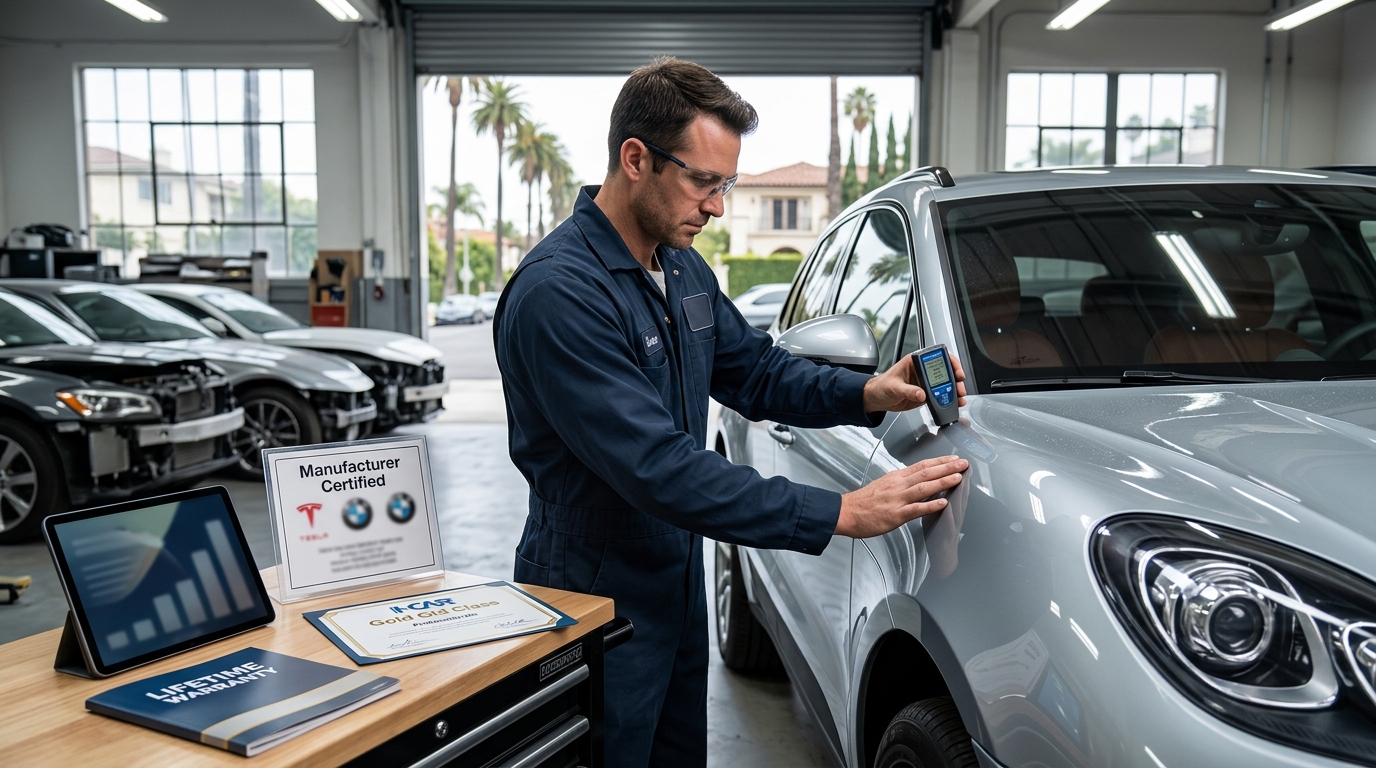
Essential Certification and Warranty Standards for Insurance Claim Body Shops in West Los Angeles
Insurance claim processing in West Los Angeles has shifted dramatically toward strict quality control metrics. Recent industry data indicates that vehicles repaired by I-CAR Gold Class certified facilities experience 40% fewer comebacks for cosmetic or structural issues compared to non-certified shops. This statistic underscores a critical reality for vehicle owners: the certification status of your repair facility directly impacts the longevity of your vehicle's safety and resale value. Navigating these standards is not merely a bureaucratic hurdle but a fundamental requirement for ensuring your insurance claim results in a restoration that meets original equipment manufacturer (OEM) specifications.
Understanding Industry Certifications
The automotive repair landscape is governed by rigorous certification bodies that validate technical competence. For West Los Angeles residents, understanding these credentials is vital when selecting a provider for collision repair. The most prominent standard is the I-CAR Gold Class designation. This certification requires technicians to complete extensive training in specific repair categories, including structural repair, non-structural repair, and refinish operations.
Another critical credential is the ASE (Automotive Service Excellence) certification. While I-CAR focuses on collision repair, ASE covers broader automotive service areas. A shop holding both certifications demonstrates a comprehensive commitment to technical excellence. These certifications ensure that the technicians working on your vehicle are up-to-date with the latest repair techniques and safety protocols.
Additionally, many manufacturers maintain their own certified repair networks. These programs, often referred to as OEM-certified shops, require specialized tools and training specific to that brand. For luxury or high-performance vehicles common in West Los Angeles, adhering to these manufacturer-specific standards is often necessary to preserve warranty coverage. I-CAR Gold Class remains the gold standard for collision repair quality assurance.
Warranty Standards and Coverage
Warranty coverage for collision repairs is a complex area governed by both federal regulations and state laws. In California, the Bureau of Automotive Repair (BAR) enforces strict guidelines regarding repair warranties. A fundamental principle is that the repair facility must provide a written warranty for all parts and labor. This warranty typically lasts for a minimum of 12 months or 12,000 miles, whichever comes first.
It is crucial to understand that warranties are not uniform across all repair types. Structural repairs often carry longer warranty periods due to the critical nature of safety components. Cosmetic repairs, such as paint matching, may have different terms. Always request a detailed warranty document before authorizing any work. This document should clearly outline what is covered, the duration of coverage, and the process for filing a claim if issues arise.
Furthermore, insurance policies may influence warranty terms. Some policies require the use of specific repair facilities to maintain full coverage. Understanding these nuances can prevent unexpected costs down the line. California Bureau of Automotive Repair provides official resources for consumer protection.
Navigating the Insurance Claims Process
The insurance claims process can be daunting, but knowledge empowers vehicle owners to advocate for their interests. The first step is always to document the damage thoroughly. Take photos from multiple angles and note any pre-existing conditions. This documentation serves as evidence in case of disputes regarding the extent of the damage.
Next, communicate clearly with your insurance adjuster. Provide them with the documentation and request a detailed estimate. Be wary of estimates that seem unusually low, as they may indicate the use of inferior parts or inadequate labor hours. It is also important to understand your policy's deductible and coverage limits. These factors will determine your out-of-pocket costs and the scope of the repair.
Finally, choose a repair facility that is trusted by your insurance provider. Many insurers have preferred networks, but you are not obligated to use them. However, using a non-network shop may complicate the payment process. National Association of Insurance Commissioners offers guidelines for consumer rights in insurance claims.
OEM Specifications and Parts
Original Equipment Manufacturer (OEM) specifications are the blueprint for vehicle safety and performance. When a vehicle is damaged, repairs must adhere to these specifications to restore it to its pre-accident condition. Using non-OEM parts can compromise structural integrity and safety features.
West Los Angeles is home to many high-end vehicle owners who demand the highest quality repairs. These vehicles often require specialized tools and techniques that only certified shops possess. For example, aluminum body repairs require different welding techniques than steel. Using the wrong method can lead to corrosion or structural failure.
Additionally, modern vehicles are equipped with advanced driver assistance systems (ADAS). These systems, including lane departure warnings and automatic emergency braking, must be calibrated after any collision repair. Failure to calibrate these systems can result in serious safety hazards. Insurance Institute for Highway Safety provides critical data on vehicle safety and repair standards.
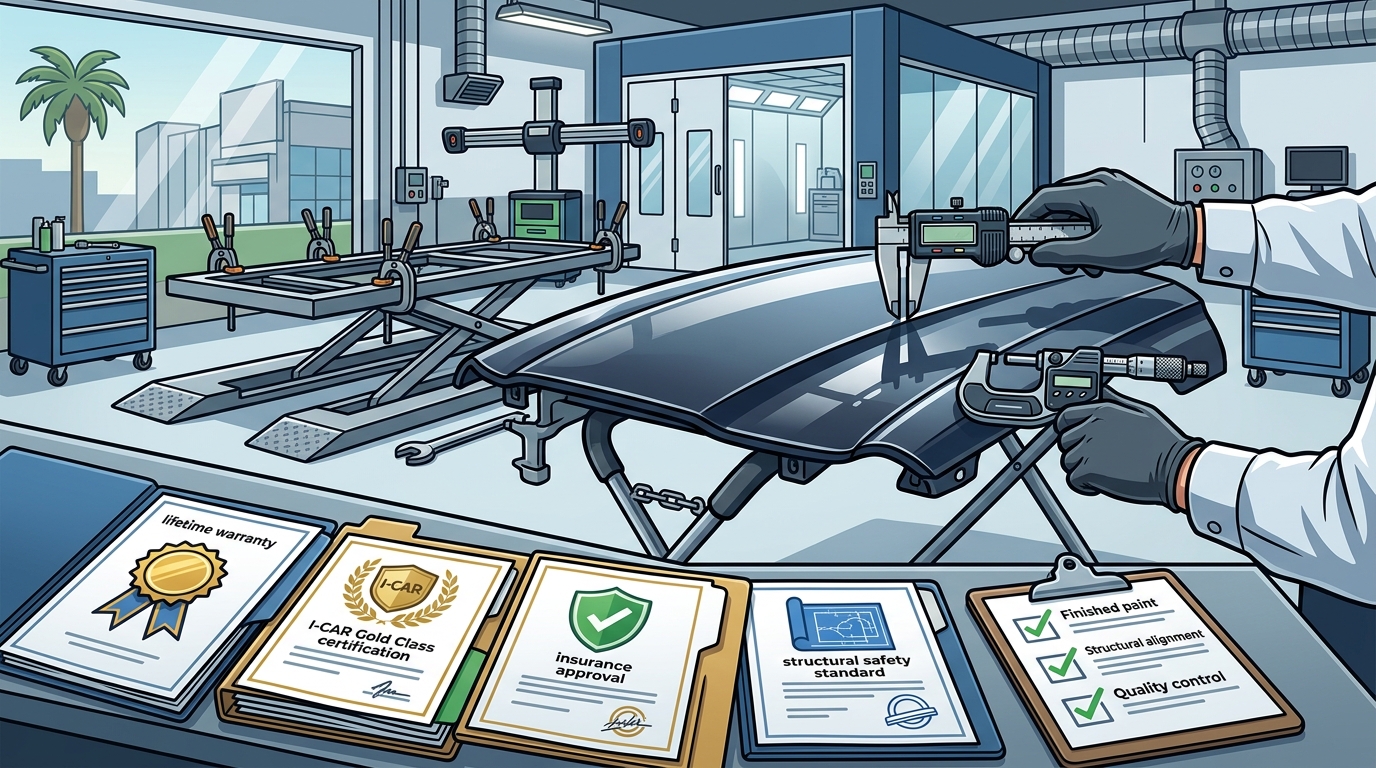
Choosing the Right Facility
Selecting the right body shop is a decision that impacts your safety and financial well-being. Start by verifying the shop's certifications. Look for I-CAR Gold Class and ASE credentials. These certifications indicate a commitment to ongoing education and technical excellence.
Next, check the shop's reputation. Read online reviews and ask for referrals from friends and family. A reputable shop will have a history of satisfied customers and transparent communication. Do not hesitate to visit the shop in person. Observe the cleanliness of the facility and the professionalism of the staff.
Finally, compare estimates from multiple shops. Be sure to compare apples to apples by ensuring that the estimates include the same parts and labor hours. A lower estimate is not always better if it compromises quality. Autoworx310 Collision Repair offers comprehensive services tailored to West Los Angeles residents.
Key Takeaways
- I-CAR Gold Class certification ensures technicians meet rigorous training standards for collision repair.
- California law mandates a minimum 12-month or 12,000-mile warranty on collision repairs.
- OEM specifications are critical for maintaining vehicle safety and structural integrity.
- ADAS calibration is required after most collision repairs to ensure safety systems function correctly.
- Always verify shop certifications and reputation before authorizing repairs.
- Document all damage thoroughly to support your insurance claim.
- Understanding your insurance policy helps avoid unexpected out-of-pocket costs.
Frequently Asked Questions
What is I-CAR Gold Class certification?
I-CAR Gold Class certification is a designation awarded to collision repair facilities that meet rigorous training and equipment standards. It ensures that technicians are highly skilled in structural repair, non-structural repair, and refinish operations.
How long does a warranty on collision repairs last in California?
In California, collision repair warranties must last for a minimum of 12 months or 12,000 miles, whichever comes first. This warranty covers both parts and labor.
Do I have to use a specific body shop for my insurance claim?
No, you have the right to choose your own repair facility. However, using a shop within your insurer's network may simplify the payment process and ensure adherence to their quality standards.
Why is ADAS calibration important after a collision?
ADAS calibration is crucial because modern safety systems rely on precise sensor alignment. If these sensors are not recalibrated after a collision, the safety features may not function correctly, posing a risk to the driver and passengers.
What should I look for in a body shop estimate?
Look for a detailed estimate that breaks down parts, labor, and materials. Ensure that the estimate includes OEM parts if you prefer them, and verify that the labor hours align with industry standards.
Can I use aftermarket parts for my repair?
Yes, you can use aftermarket parts, but they must meet the same safety and quality standards as OEM parts. However, using OEM parts is often recommended for luxury vehicles to maintain warranty coverage.
How can I verify a body shop's reputation?
Check online reviews, ask for referrals, and verify certifications with organizations like I-CAR and ASE. Visiting the shop in person can also provide insight into their professionalism and cleanliness.
Secure Your Vehicle's Future Today
Do not compromise on the quality of your vehicle's repair. At Autoworx310, we combine I-CAR Gold Class expertise with a deep understanding of West Los Angeles' unique automotive needs. Our team is dedicated to restoring your vehicle to its pre-accident condition using the latest technology and OEM specifications. Contact us today to schedule your consultation and experience the Autoworx310 difference. Visit our contact page to get started.