

How Does the Insurance Claims Process Work for Collision and Bumper Damage?
When you are involved in an accident, the insurance claims process is a structured series of steps designed to assess liability, estimate repair costs, and authorize the necessary work. For collision and bumper damage, this process typically involves filing a report, obtaining a professional estimate, and negotiating the repair scope with your insurer. Understanding these stages helps you navigate the system efficiently and ensures your vehicle is restored safely. Auto Worx Collision Center in West Los Angeles guides drivers through this process, helping you communicate effectively with your insurance provider while maintaining high standards for vehicle safety and aesthetics.
The Initial Reporting and Liability Phase
The first step in any insurance claim is the immediate reporting of the incident. This phase establishes the factual record of the event, including the location, time, and parties involved. Liability is often determined during this stage based on police reports and witness statements. If the other driver is at fault, their insurance company will typically handle the claim, though you may still need to file a claim with your own insurer if you have collision coverage. This initial documentation is critical because it sets the baseline for all subsequent interactions with the insurance adjuster.
The Adjuster Inspection and Damage Assessment
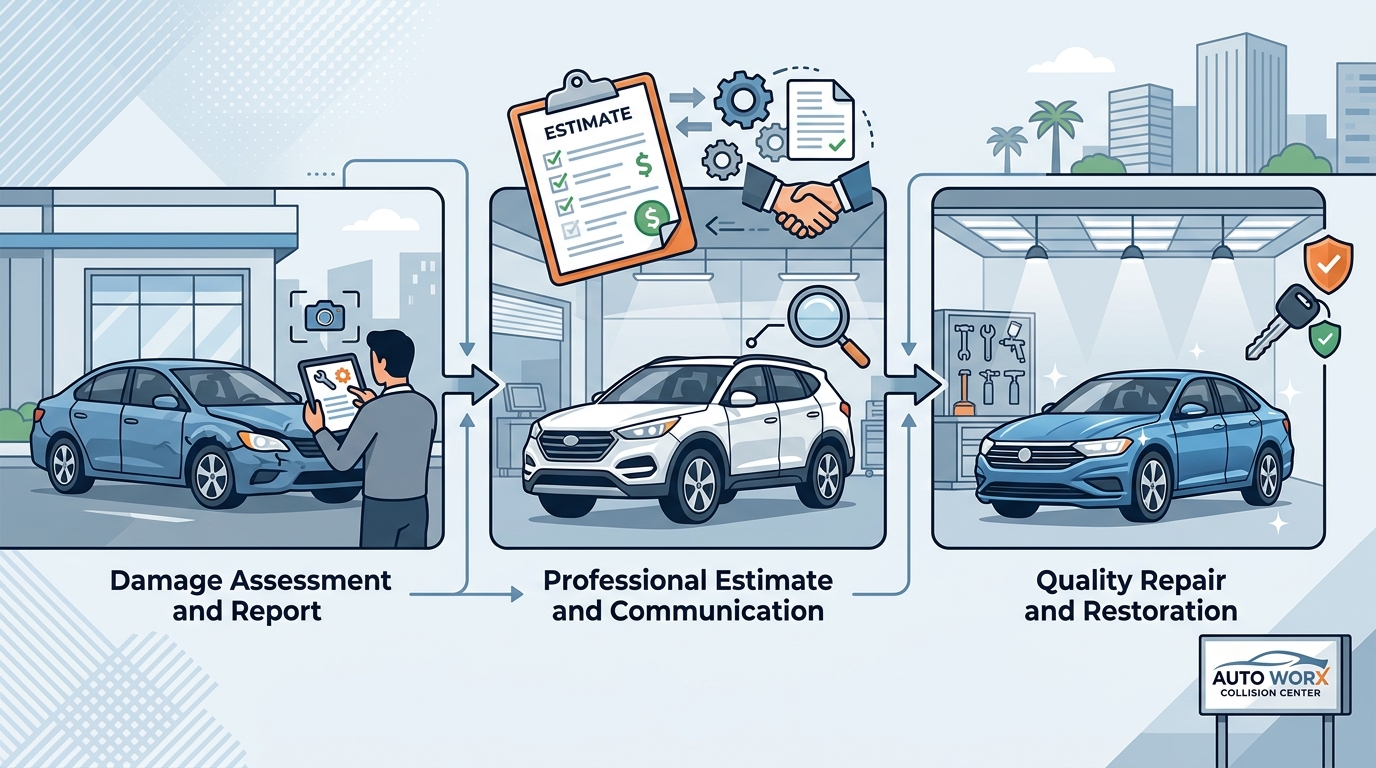
Once the claim is filed, an insurance adjuster will be assigned to evaluate the damage. The adjuster is a professional employed by the insurance company to determine the extent of the damage and the cost to repair it. They will inspect the vehicle, often at a body shop or a designated inspection center, to identify all visible and hidden damage. For bumper damage, the adjuster will look beyond the cosmetic cover to check for structural components, sensors, and lighting fixtures. This assessment forms the basis of the repair estimate that the insurance company will approve. according to Need Help with
Navigating the Repair Estimate and Negotiation
After the inspection, the body shop provides a detailed repair estimate to the insurance company. This document itemizes the labor, parts, and materials required to restore the vehicle. The insurance company may negotiate this estimate to reduce costs, a process that can sometimes lead to disputes over the scope of work. It is important to understand that the estimate is a proposal, not a final contract. If you believe the estimate does not fully address the damage, you can request a re-inspection or provide additional evidence of the repair needs. Auto Worx Collision Center works with you to ensure the estimate accurately reflects the work required to return your vehicle to its pre-accident condition.
Authorization and the Repair Process
Once the estimate is agreed upon, the insurance company issues an authorization for the repair. This authorization specifies the approved scope of work and the maximum amount the insurer will pay. The body shop then begins the repair process, which may involve ordering parts and scheduling labor. During this phase, the shop may discover additional damage that was not visible during the initial inspection. If this occurs, the shop must communicate with the insurance adjuster to update the estimate and obtain new authorization. This step ensures that all necessary repairs are covered and that the vehicle is restored safely.
Final Inspection and Payment Settlement
After the repairs are completed, the insurance company may conduct a final inspection to verify that the work meets their standards. This inspection ensures that the vehicle has been repaired according to the authorized estimate. Once the inspection is passed, the insurance company issues payment to the body shop. If you have a deductible, you will be responsible for paying this amount directly to the shop. The final settlement closes the claim, and your vehicle is returned to you. It is advisable to review the final invoice to ensure it matches the authorized estimate and that all repairs are to your satisfaction.
Key Takeaways
- File your claim immediately after an accident to establish a clear record of liability and damage.
- The insurance adjuster’s inspection determines the scope of the approved repairs, so be present if possible.
- Repair estimates are negotiable, and you have the right to request a re-inspection if you disagree with the scope.
- Additional damage discovered during repairs requires new authorization from the insurance company.
- Your deductible is the portion of the repair cost you must pay out of pocket, regardless of fault.
- Working with a reputable body shop like Auto Worx Collision Center can help streamline communication with your insurer.
Frequently Asked Questions
Who pays for the repair if the other driver is at fault?
If the other driver is at fault, their liability insurance typically covers the cost of your repairs. However, if their policy limits are insufficient, you may need to use your own collision coverage or pursue a personal injury claim for any remaining costs.
What is a deductible in an auto insurance claim?
Can I choose which body shop repairs my car?
In most cases, you can choose any licensed and reputable body shop to repair your vehicle. However, some insurance companies have preferred shop networks that may offer faster processing or specific benefits. It is always your right to select a shop you trust, such as Auto Worx Collision Center.
How long does the insurance claims process usually take?
The timeline varies depending on the complexity of the damage and the availability of parts. Simple bumper repairs may take a few days, while major collision repairs can take several weeks. The insurance company’s processing time and the body shop’s workload are the primary factors.
What happens if the insurance company denies my claim?
If your claim is denied, you have the right to appeal the decision. You can request a review by a senior adjuster or file a complaint with your state’s insurance department. It is helpful to have detailed documentation of the damage and the repair estimate to support your appeal.
Do I need to pay the body shop directly?
Usually, the insurance company pays the body shop directly for the approved repairs. You are only responsible for paying your deductible. However, if you choose to pay for repairs out of pocket without filing a claim, you will pay the full cost to the shop.
Conclusion
Navigating the insurance claims process for collision and bumper damage requires understanding the roles of the adjuster, the body shop, and the insurer. By staying informed and communicating clearly, you can ensure your vehicle is repaired safely and efficiently. Auto Worx Collision Center is here to support you at every step, from the initial estimate to the final inspection. To begin your repair or to discuss your insurance claim, today.