
What Types of Dents Can Actually Be Fixed With Paintless Dent Repair?
Paintless dent repair (PDR) is a specialized technique that restores dented metal panels without using filler, sanding, or repainting. It works best on small to medium-sized dents where the factory paint remains intact and the metal has not been stretched or cracked. If the damage is minor and the surface is unbroken, PDR is often the fastest and most cost-effective solution available.
Dents That Are Ideal Candidates for PDR
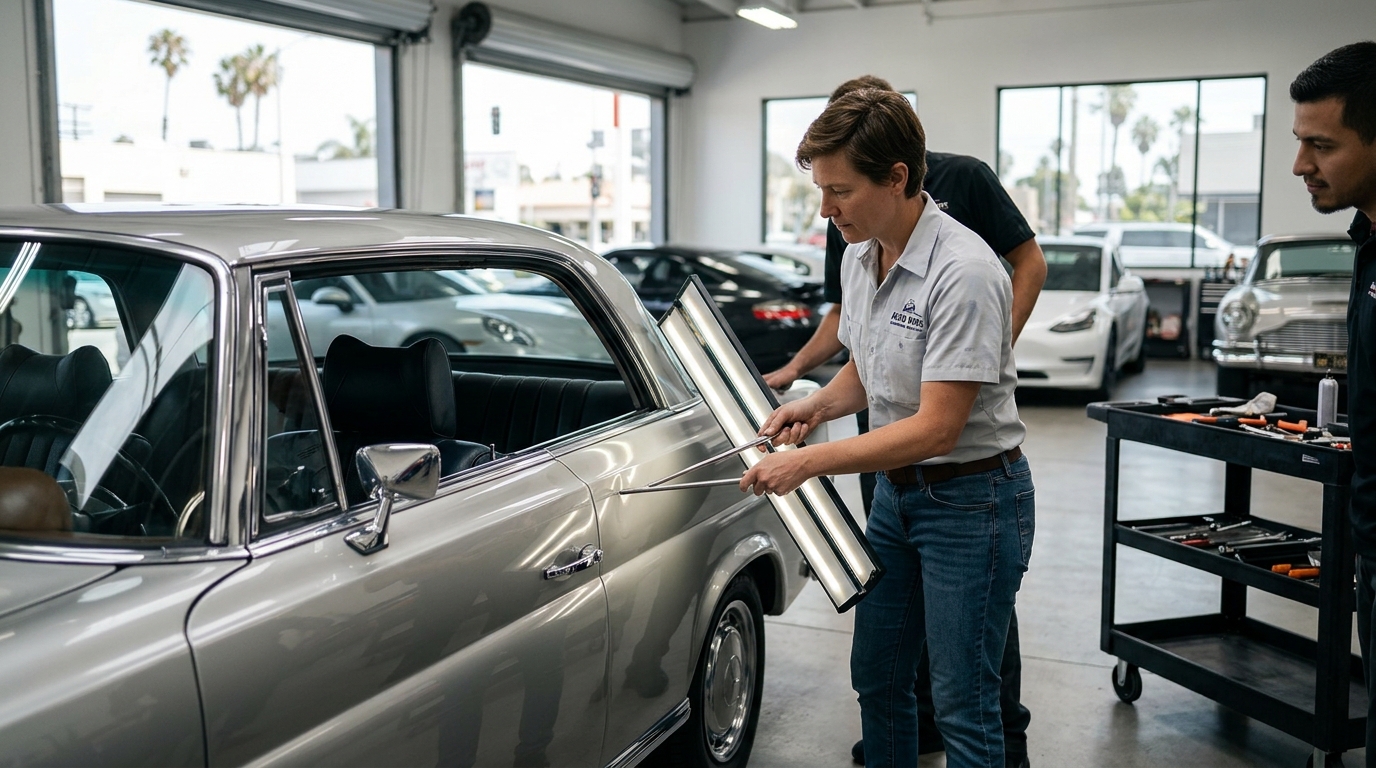
Not every dent qualifies for paintless repair. The most successful PDR jobs involve damage that is shallow and localized. A classic example is a small door ding caused by a shopping cart in a parking lot. These dents are typically round, shallow, and located on flat or gently curved panels. Because the metal retains its original shape and the paint is unharmed, technicians can access the back of the panel and massage the metal back into place.
Another common candidate is a hail dent. These are usually small, shallow, and spread across the roof or hood. Since hail damage rarely breaks the paint, PDR is the preferred method for restoring the vehicle's appearance. The key factor is that the metal must be flexible enough to be manipulated without cracking.
Dents That Cannot Be Repaired With PDR
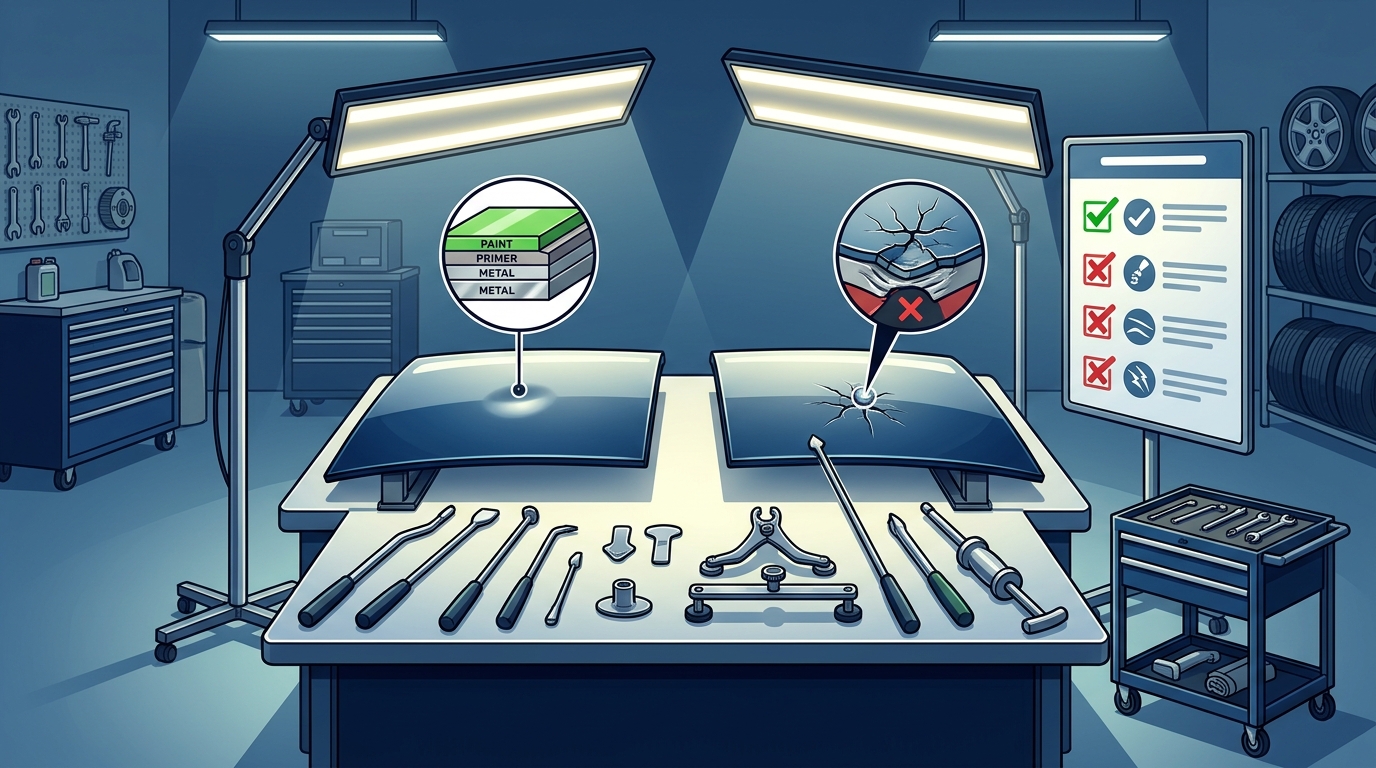
Some types of damage make PDR impossible or ineffective. The most obvious disqualifier is a broken or chipped paint surface. If the factory clear coat or base coat is cracked, PDR cannot restore the finish. In these cases, traditional body repair involving sanding, filler, and repainting is required. Attempting PDR on a cracked panel will not fix the cosmetic issue and may even worsen the damage.
Another major limitation is the location of the dent. Dents located on sharp edges, door edges, or near panel seams are difficult to access from the back. Without access to the rear of the metal, technicians cannot apply the necessary pressure to push the dent out. Additionally, deep dents that have stretched the metal beyond its elastic limit cannot be fully restored using PDR alone. These require a combination of PDR and traditional repair techniques.
The Role of Panel Material and Thickness
The type of metal used in your vehicle's construction also affects PDR eligibility. Modern vehicles often use a mix of steel, aluminum, and high-strength steel. Aluminum panels are more flexible and generally easier to repair with PDR than high-strength steel. However, some high-strength steel panels are designed to be rigid, which can make them harder to manipulate without causing cracks.
At Auto Worx Collision Center, our technicians assess the panel material during the initial inspection. We determine whether the metal can be safely manipulated or if a different repair approach is needed. This assessment ensures that we choose the most effective method for your specific vehicle.
How We Determine If Your Dent Qualifies
Every dent is unique, and a visual inspection is the only way to determine if PDR is a viable option. When you bring your vehicle to our shop, we perform a detailed examination of the damaged area. We check for paint cracks, metal stretching, and access points on the back of the panel. This process allows us to give you an accurate estimate and a realistic timeline for the repair.
If the dent is not a good candidate for PDR, we will explain why and recommend the best alternative. We believe in honest communication and will never suggest a repair method that will not deliver the results you expect. Our goal is to restore your vehicle to its pre-accident condition using the most efficient and cost-effective method available.
Why PDR Is Often the Preferred Repair Method
When a dent qualifies for PDR, the benefits are significant. The process is faster than traditional body repair, often taking only a few hours instead of several days. Because no paint is used, there is no waiting time for curing or drying. This means you can get your vehicle back on the road much sooner. Additionally, PDR preserves the factory paint, which helps maintain your vehicle's resale value.
For minor damage like door dings or hail marks, PDR is the clear winner. It is less invasive, less expensive, and produces a seamless finish. If you are unsure whether your dent qualifies, the best step is to have it inspected by a professional. Our team at Auto Worx Collision Center can evaluate your damage and provide a clear recommendation.
Key Takeaways
- Paintless dent repair works best on small, shallow dents where the paint is intact.
- Dents with cracked or chipped paint require traditional body repair and repainting.
- Access to the back of the panel is critical for successful PDR.
- Aluminum panels are generally easier to repair with PDR than high-strength steel.
- A professional inspection is necessary to determine if your specific dent qualifies.
- PDR is faster and more cost-effective than traditional repair for eligible dents.
Frequently Asked Questions
Can paintless dent repair fix a dent with a cracked paint surface?
No. If the factory paint is cracked or chipped, PDR cannot restore the finish. Traditional body repair involving sanding and repainting is required in these cases.
How long does a paintless dent repair take?
Most PDR repairs take a few hours, depending on the size and location of the dent. This is significantly faster than traditional body repair, which can take several days.
Is PDR cheaper than traditional body repair?
Yes. Because PDR does not involve sanding, filler, or repainting, it is typically less expensive than traditional body repair for eligible dents.
Can PDR fix a deep dent?
Deep dents that have stretched the metal beyond its elastic limit cannot be fully restored using PDR alone. These may require a combination of PDR and traditional repair techniques.
Does PDR affect my vehicle's resale value?
No. PDR preserves the factory paint, which helps maintain your vehicle's resale value. Traditional repair involving repainting can sometimes reduce resale value if the color match is not perfect.
What types of vehicles are eligible for PDR?
Most vehicles are eligible for PDR, including cars, trucks, and SUVs. The key factors are the size, depth, and location of the dent, as well as the condition of the paint.